Smart Water Treatment: Biodegradable Bio-Coagulant Hydrogel Beads
DATE OF COMPLETION: 20/05/2026
📌 Project Overview
- Goal: Replacing synthetic, expensive chemical water treatments with eco-friendly hydrogel beads made from natural biomaterials and agricultural waste.
- Smart Tech: Integrated with an ESP32 microcontroller and turbidity sensor for automated visual feedback via LED indicators.
- SDGs Targeted: SDG 6 (Clean Water and Sanitation), SDG 12 (Responsible Consumption & Production), SDG 13 (Climate Action).
🧪 Science & Materials Behind the Beads
- Natural Biomaterials
- Moringa Seed Powder (Moringa oleifera): Contains positively charged cationic proteins that neutralize negatively charged soil particles, causing them to form heavy flocs and drop to the bottom.
- Banana & Orange Peel Powders: Natural pectin, cellulose, and carboxyl functional groups actively bind contaminants via biosorption and surface ion interactions.
- Activated Charcoal: High-porosity carbon matrix designed for physical adsorption of suspended impurities.
- Hydrogel Matrix Synthesis
- Sodium Alginate + Calcium Chloride ($\text{CaCl}_2$): Sodium alginate acts as the encapsulating polymer matrix. Dropping the biomaterial-alginate mixture into a $\text{CaCl}_2$ solution triggers instant ionic crosslinking to form firm, biodegradable hydrogel beads.
🔬 Bead Formulation
- Step 1: Raw Materials Collection – Collect moringa seeds, banana peels, orange peels, and charcoal.
- Step 2: Slight De-Moisting – Wash all materials and naturally de-moisten them to remove excess moisture.
- Step 3: Grinding into Fine Powders – Grind the dried materials separately into fine powders using a grinder.
| Moringa Powder | Banana Peel Powder |
|---|---|
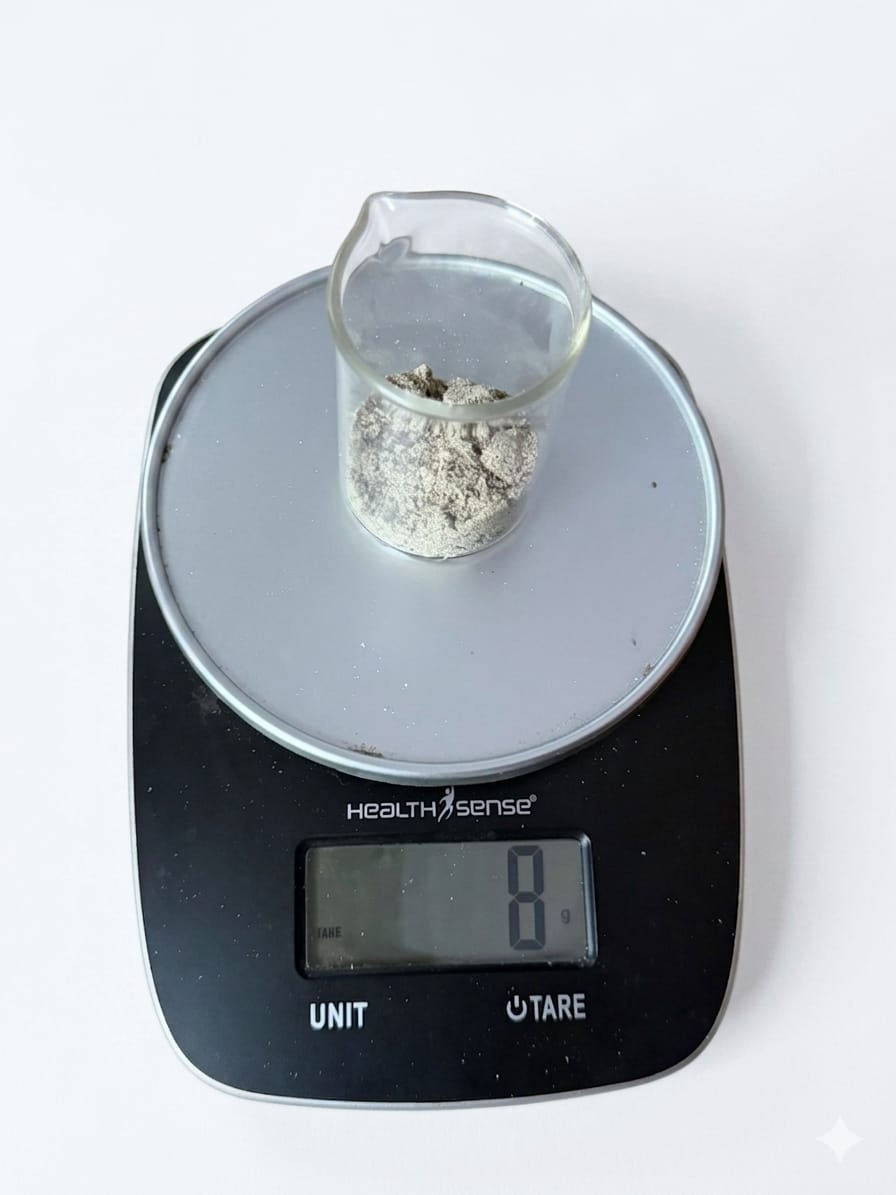 |
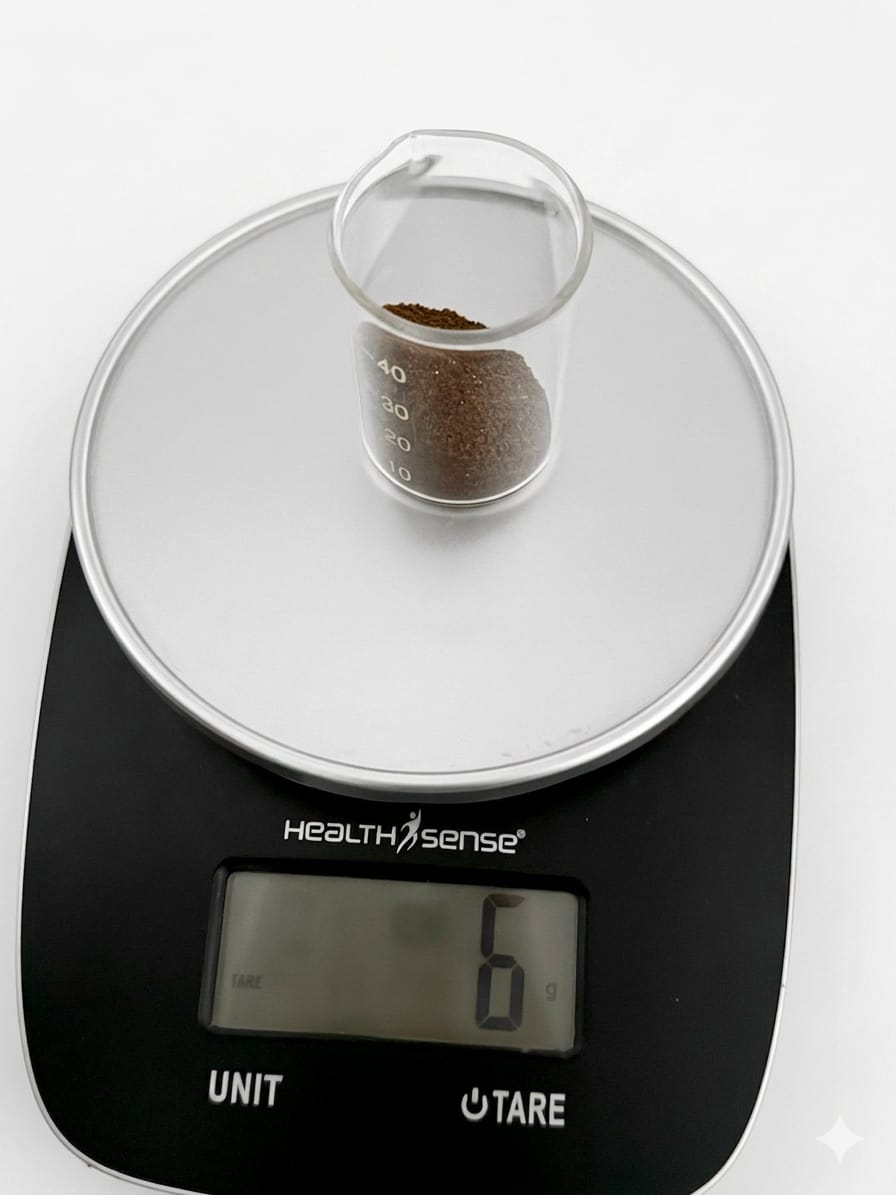 |
| Orange Peel Powder | Activated Charcoal |
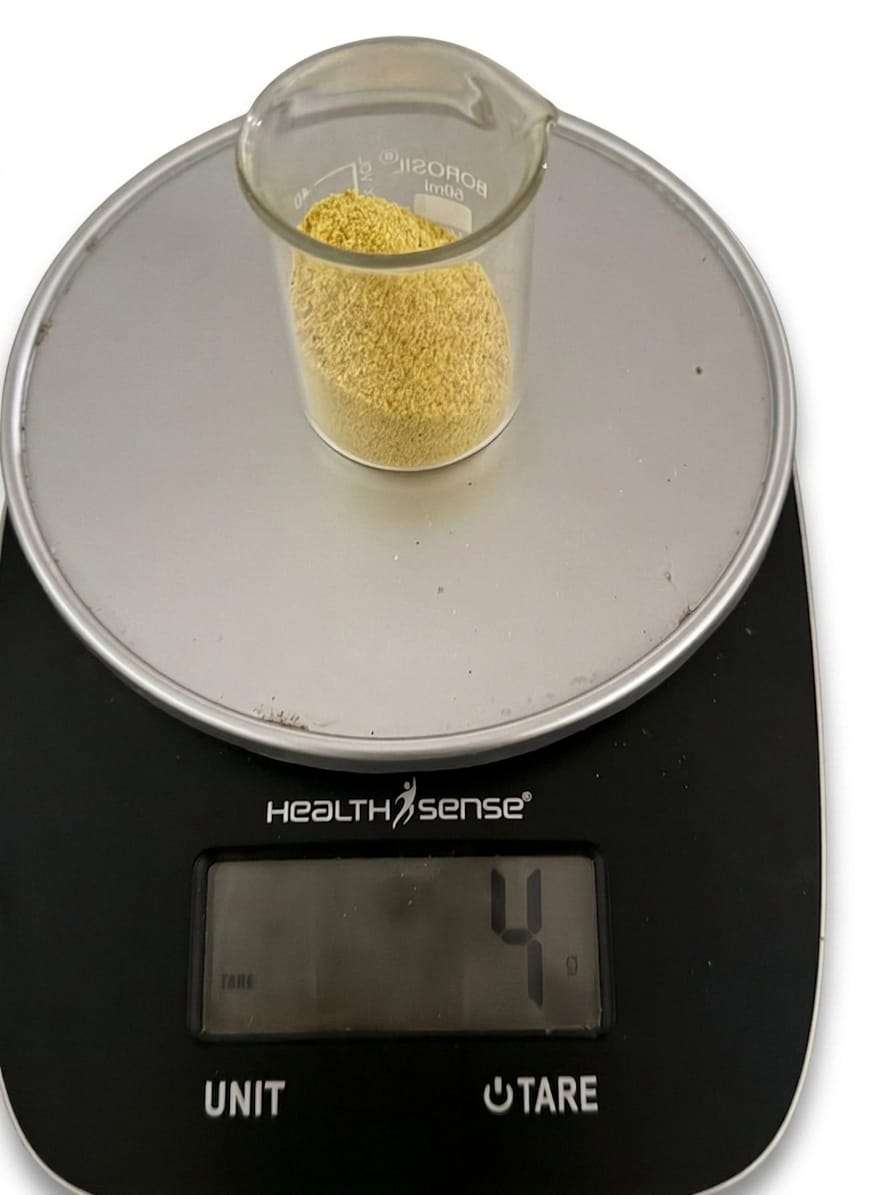 |
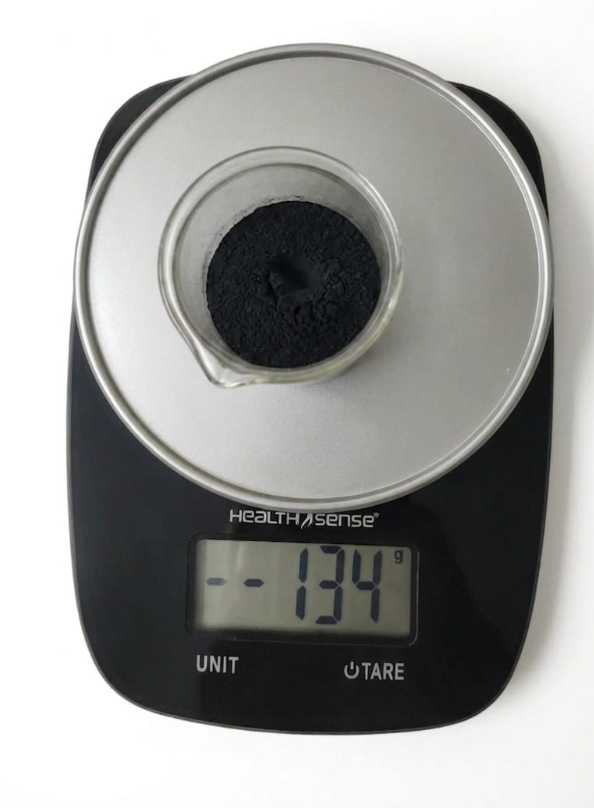 |
- Step 4: Preparing Sodium Alginate Solution – Dissolve sodium alginate in distilled water using a double-boiler setup to facilitate smooth dissolution without degrading the polymer.
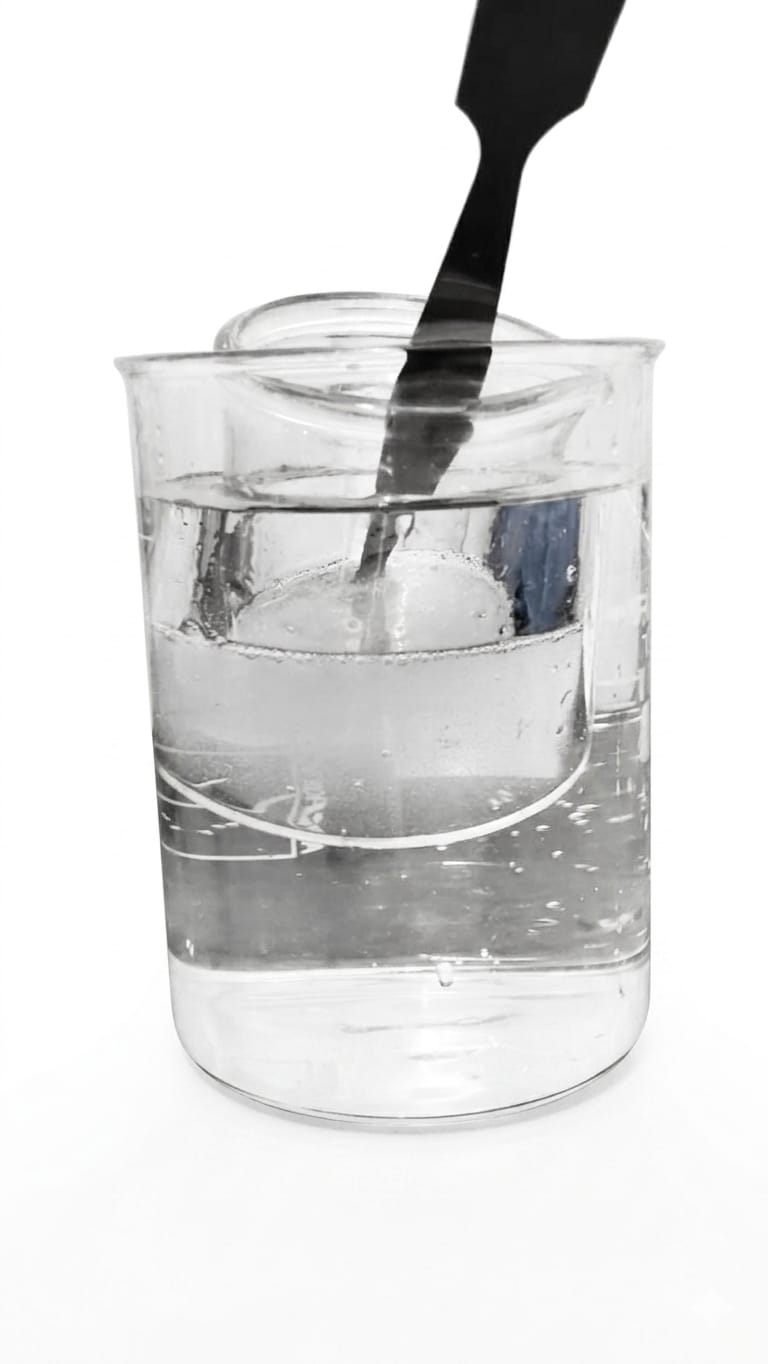 *Figure 1: Double-boiler setup for dissolving sodium alginate.*
- Step 5: Mixing All Powders into the Solution – Add all prepared powders into the sodium alginate solution and mix thoroughly.
- Step 6: Homogeneous Mixture – Continue mixing until a smooth, uniform black slurry is obtained.
- Step 7: Dripping into Calcium Chloride Solution – Transfer the slurry into a syringe and drop it carefully into a $\text{CaCl}_2$ solution.
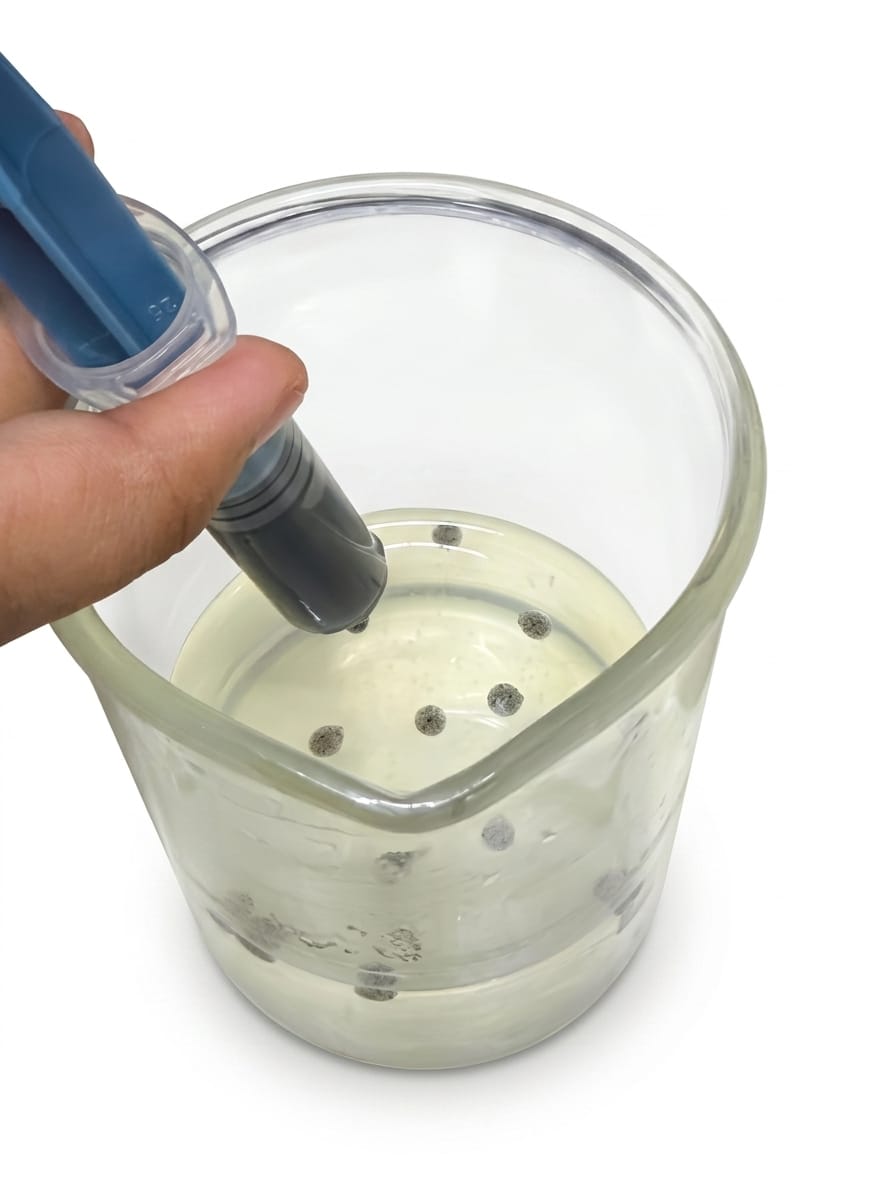 *Figure 2: Dripping biomaterial slurry into Calcium Chloride solution using a syringe.*
- Step 8: Bead Formation (Cross-Linking) – Allow calcium ions to cross-link with sodium alginate to form stable, spherical hydrogel beads. Leave them in the bath to solidify.
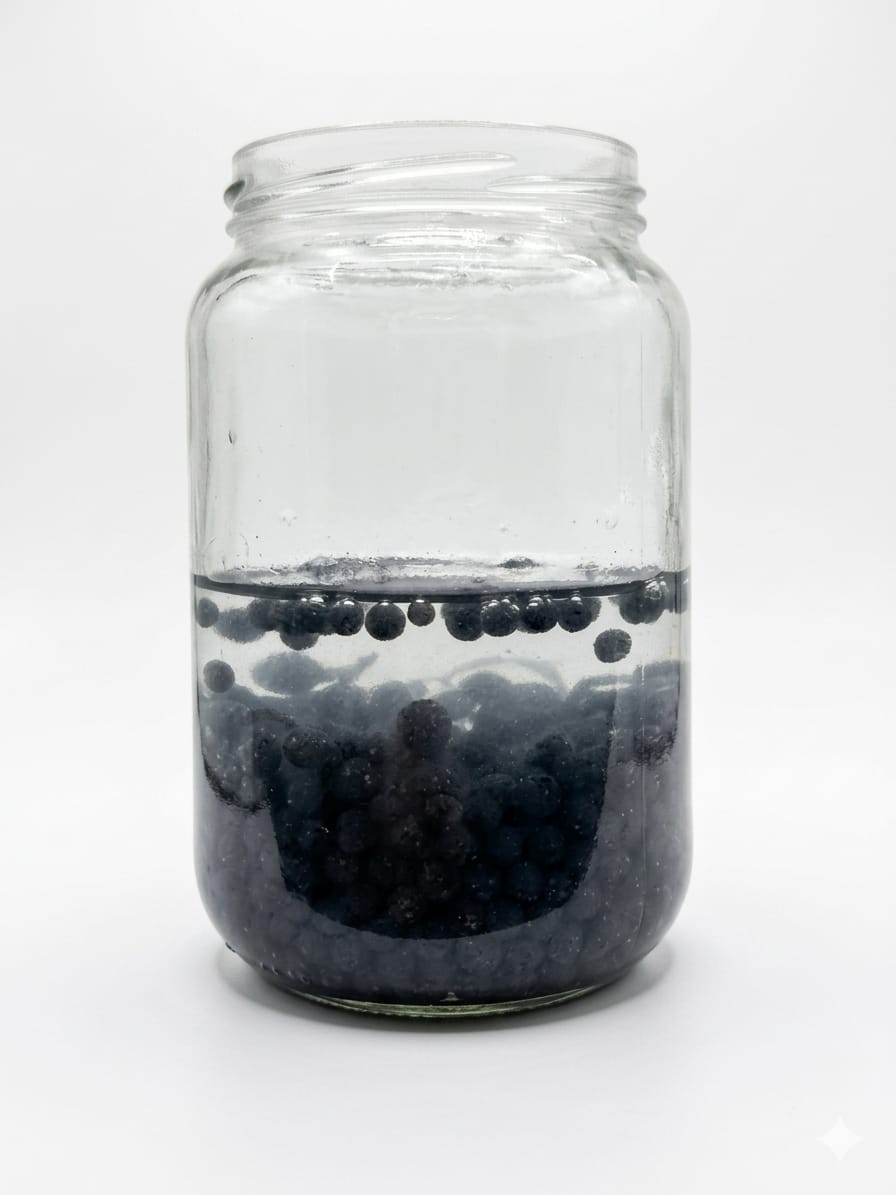 *Figure 3: Hydrogel beads curing inside the Calcium Chloride bath.*
- Step 9: Washing – Wash the formed beads multiple times with distilled water to remove remaining impurities.
- Step 10: Drying – Place the beads in a plastic petri dish and dry them completely.
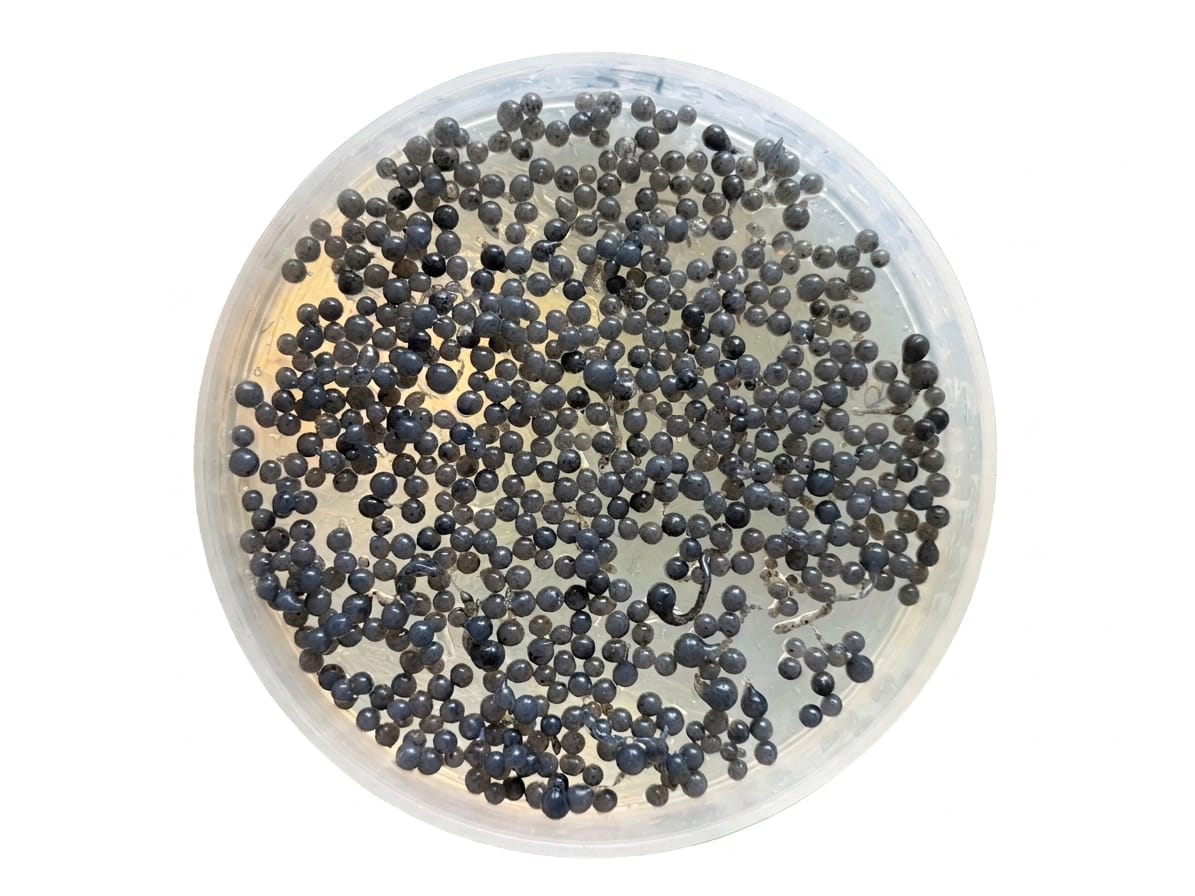 *Figure 4: Synthesized hydrogel beads drying in a plastic petri dish.*
⚡ IoT Smart Sensor Setup & Qualitative Results Hardware Configuration
- ESP32 Microcontroller: Processes sensor input to track water clarity in real time.
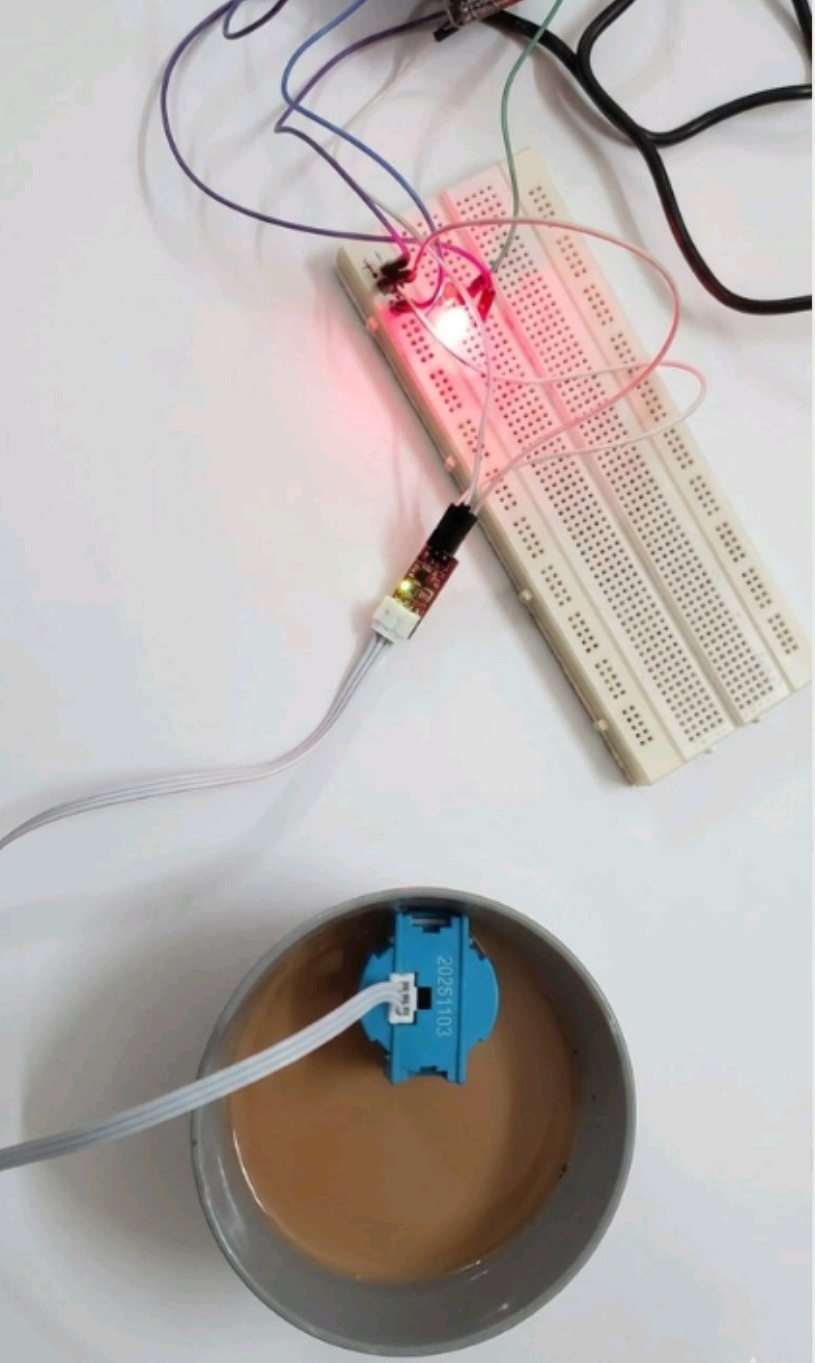
- Analog Turbidity Sensor: Works on a light-scattering mechanism to detect suspended particulate density.
- Status LED Output: Visual indicators wired directly to the ESP32.
Testing & Visual Outcome
- Procedure: 250 mL soil-water samples were treated with equal bead doses, stirred gently for 1 minute, and left to settle for 10–15 minutes.
- Observations: Rapid floc formation, visible particle settling, and significant recovery of water clarity.
| Initial Contaminated Water | Treated & Clarified Water |
|---|---|
 |
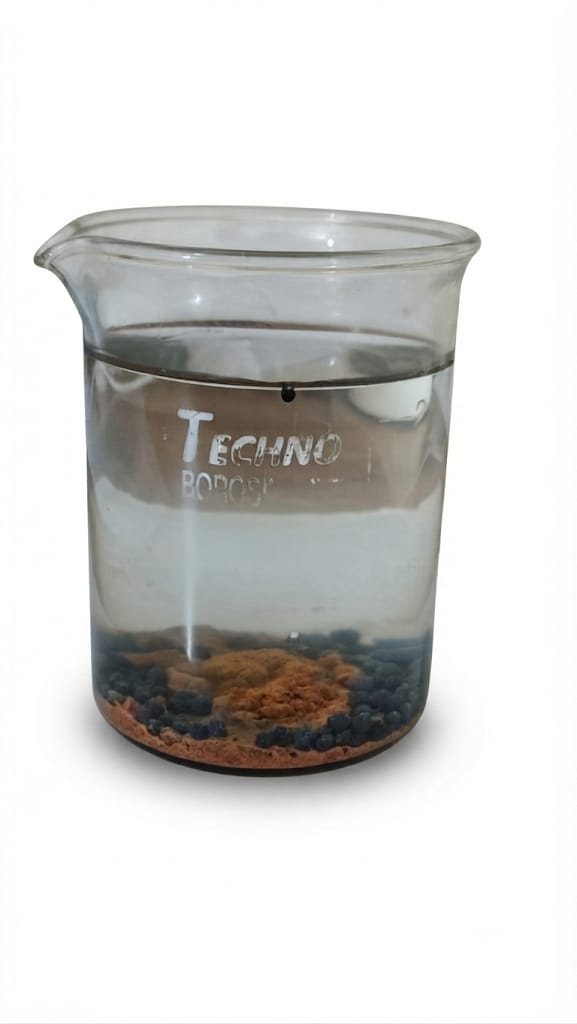 |
| Raw turbid sample before treatment | Clear sample after 30 mins treatment |
- Qualitative Indicator: Once suspended particles settled and water clarity was restored, the ESP32 triggered the status LED to switch from red to green, signaling successful purification.
| Turbid Water (System Triggered) | Purified Water (Target Achieved) |
|---|---|
 |
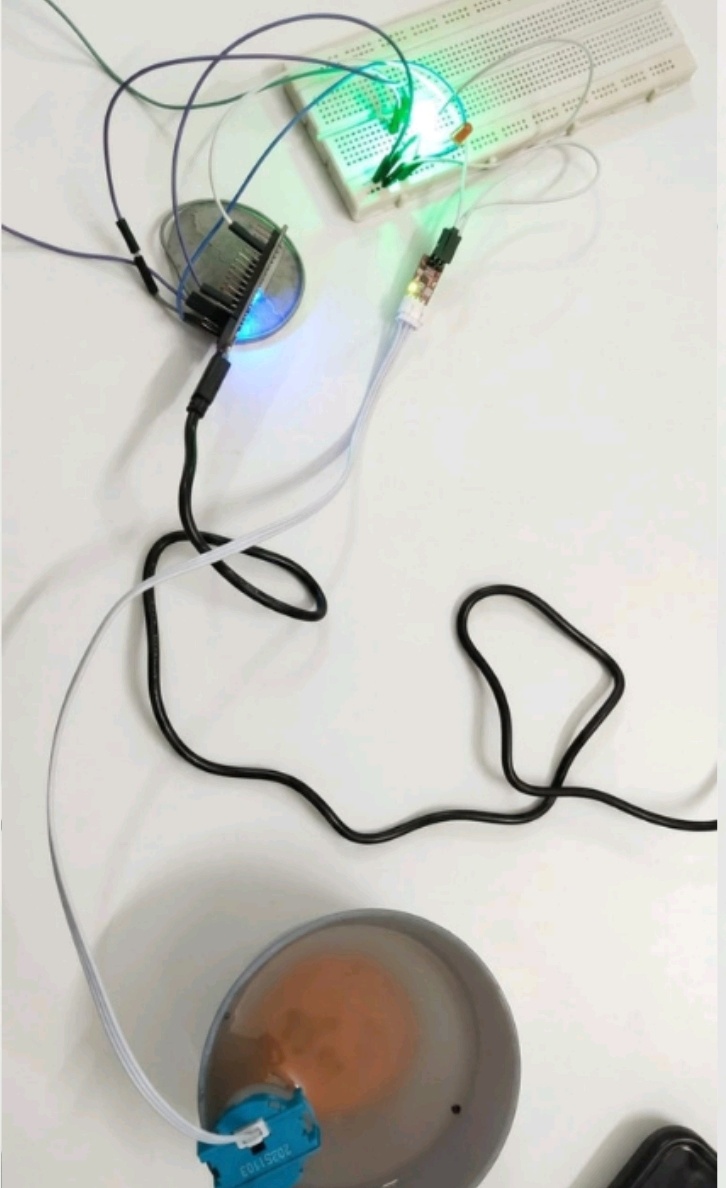 |
| Red LED active during high turbidity | Green LED active post-purification |